
Space & Extreme Environments
Materials for extreme environments
The hottest, most oxidising and most thermally punishing environments — atmospheric re-entry, high-temperature industry, concentrated solar energy — share a common materials-science frontier. This pathway summarises that frontier from published literature and states UAX's own work only at capability level.
Literature context
The core challenges
Three linked problems define extreme-environment materials.
High temperature vs. oxidation
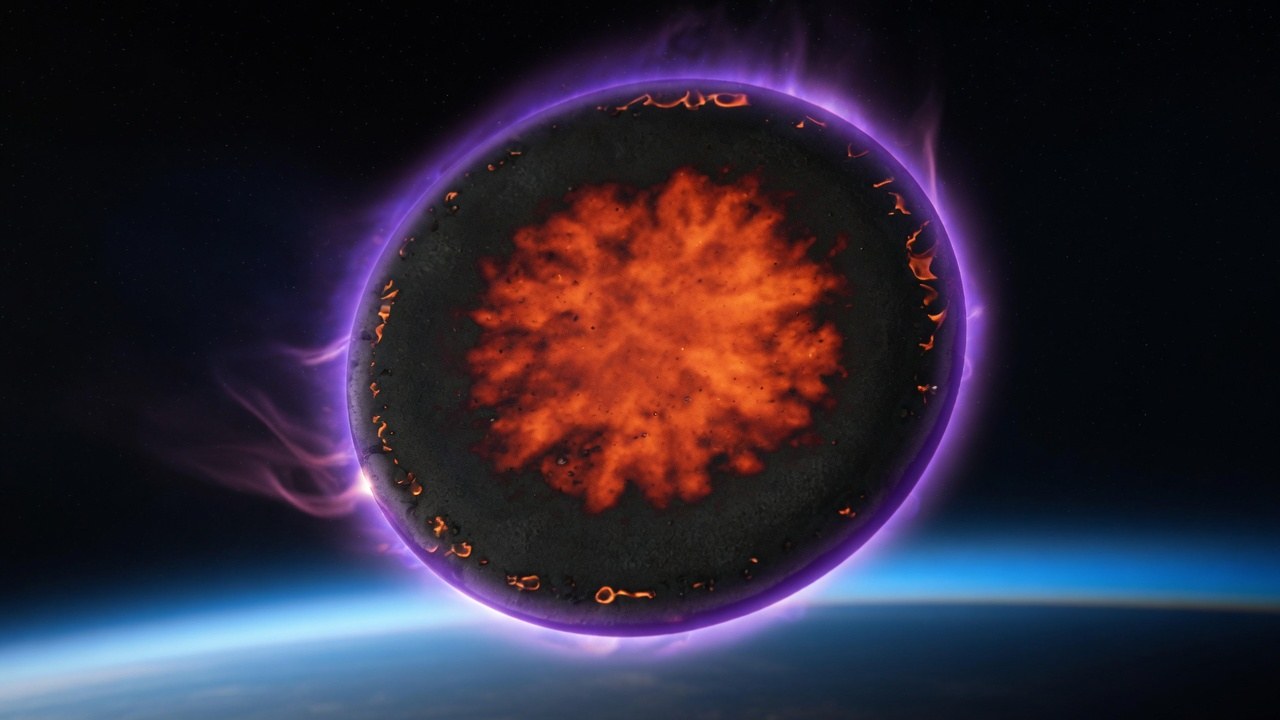
Carbon-carbon composites keep their strength to extreme temperatures in inert conditions, but in air they begin to oxidise at only a few hundred degrees Celsius — so an oxidation-protection system is essential for hot air service.
Thermal cycling & atomic oxygen
In low Earth orbit, atomic oxygen steadily erodes exposed polymers and carbon; combined with sunlight-to-shadow temperature cycling it degrades materials faster than either effect alone, so surfaces need protective coatings and combined-environment testing.
Ultra-high-temperature ceramics
Ultra-high-temperature ceramics such as zirconium diboride and hafnium carbide melt above about 3000°C and form protective oxide layers; ceramic matrix composites add toughness and are already used in commercial jet-engine hot sections.
Literature context
One term, three different things
“Self-healing” is used loosely. For accuracy we keep three distinct concepts separate.
Self-healing polymers / nanocomposites
Reversible bonds or embedded healing agents repair damage at near-ambient to moderate temperatures. A distinct field.
High-temperature carbon-carbon composites
A structural material — strong when hot but oxidation-vulnerable. It is not itself self-healing.
Self-sealing oxidation-protection coatings for C/C
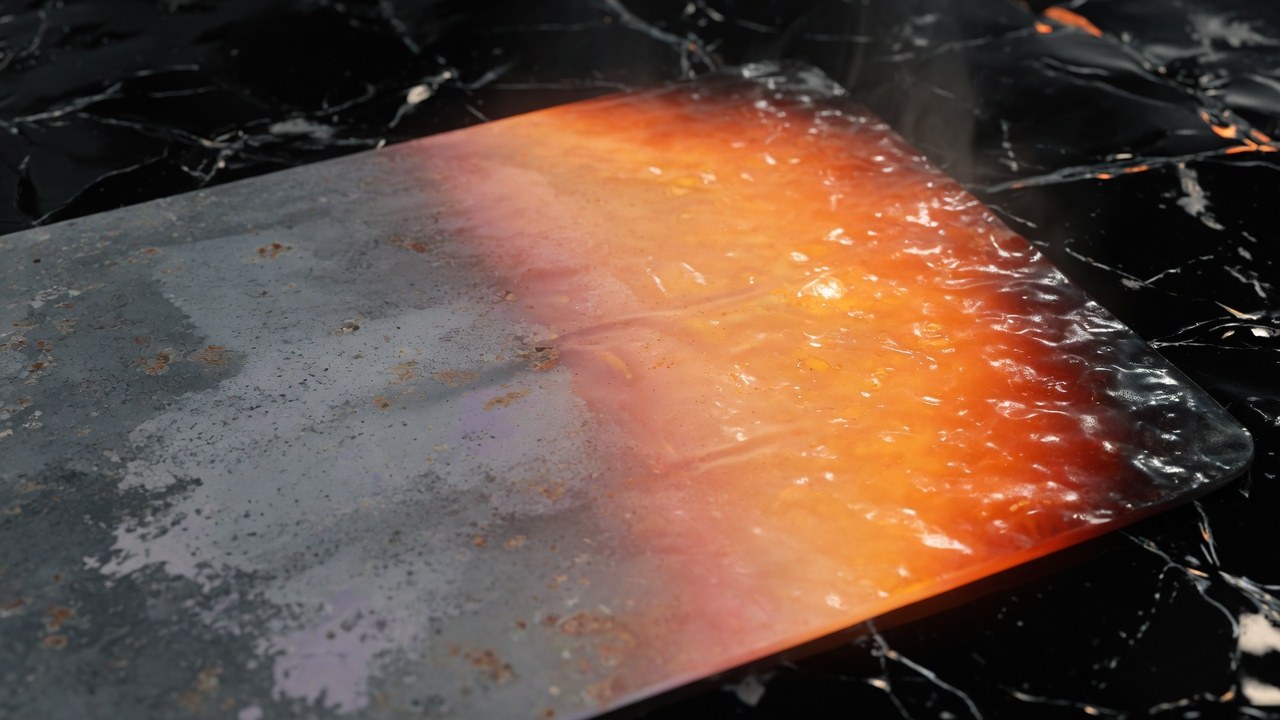
Research literature describes coatings for carbon-carbon in which a boron-rich glass flows into cracks and forms a stable borosilicate barrier — a healing behaviour of the coating, not of the carbon itself.
UAX process (sanitised)
UAX — capability level
Evidence-supported research directions
Directions of interest, framed from published science. These are research contexts, not fielded-product claims.
Oxidation-protection coatings
Glass-forming, self-sealing coating systems that re-close cracks at service temperature to protect carbon-carbon and composite substrates.
Thermo-structural resilience
Managing steep thermal gradients and thermal-expansion mismatch across coating, matrix and fibre interfaces.
Protective materials for demanding environments
Materials that combine environmental durability with the mass and integration constraints of real platforms.
Literature context
Civil-space & industrial applications
The same high-temperature science supports civilian uses.
Thermal protection
Ablative and reusable thermal-protection lineages (for example NASA's PICA family, adapted commercially) manage entry heating that can reach on the order of 1800°C at the surface.
Concentrated solar power
Ceramic solar receivers operate above 800°C; silicon-carbide receivers have reached about 850°C air-outlet temperatures in demonstration.
High-temperature industry
Refractory ceramics and ceramic matrix composites serve furnaces, radiant tubes, kiln furniture and gas-turbine hot sections.
UAX — capability level
UAX's role
UAX describes its own work at capability level: advanced materials for protection and extreme environments, pursued through research and, where appropriate, co-development.
Detailed parameters, performance, readiness levels and any test context are addressed only through a controlled institutional pathway — not on public pages. The scientific context above is drawn from published literature and does not assert a UAX product, performance level, patent right, or space-flight validation.
Request controlled access Enter Defence pathway ← Corporate home